

I used to like the feeling of being above religion. The people I thought of as intelligent had already dismissed it, and I was young enough to confuse their dismissal with my own thinking. Religion was control, fear, robes, incense, guilt, priests, old women clutching beads, men with power discovering that God wanted exactly what they wanted. It was an easy conclusion to hold because the ugliest evidence was everywhere, and because holding it made me feel as if I had seen through something. That is the nice thing about contempt: it can feel like sight while asking almost nothing of you.
That confidence lasted longer than it deserved. Somewhere in my thirties, I started reading the old texts with less of a sneer, and paying attention to the people whose lives were actually held together by them. The texts still contained control, fear, and all the human machinery that gets attached to anything powerful enough to organise a crowd. They also contained something I had been too pleased with myself to notice: a long record of what people do when they are afraid, when they want power, when the group has chosen a lie and the only unforgivable act left is seeing it.
If you grow up outside the faith, demons look like the easiest part to discard. Horns, smoke, growling voices, a creature in the corner of a dark room. A modern person can laugh at that and move on. Then you watch an ordinary group decide, within minutes, which sentence everyone is allowed to say, and the old language starts to look less childish. A demon can be a name for the pattern before the pattern has been made respectable by psychology, management language, or whatever clean word the room is using that year.
Possession, in that reading, does not need a spinning head. A person repeats a phrase they did not think through because the phrase keeps them inside the room. A decent person stays silent while the cruel person is praised, and someone else notices the lie but decides the cost of saying it is too high. Nobody levitates. Nobody speaks Latin backward. They only do what human beings do when belonging is placed on one side of the table and sight is placed on the other. This is surrender with good posture.
Belonging is one of the oldest bargains in the body. The person who could read the tribe lived. The person who ignored the tribe often did not. It is fashionable to speak as if independence is our natural state, as if every adult is a little sovereign nation moving through the world with private laws, private borders, private conclusions. The body knows better. The body knows the cost of exile before the mind has found a sentence for it.
For most of human history, being cast out was exposure, hunger, and death. The old fear remains in us, badly updated for offices, dinner tables, comment sections, family chats, political movements, friend groups, and the places where intelligent people gather to agree with one another. The room no longer has to kill you. It only has to make you feel the old cold outside the fire. Respectable people still know how to freeze a person out.
That is where Babylon enters.
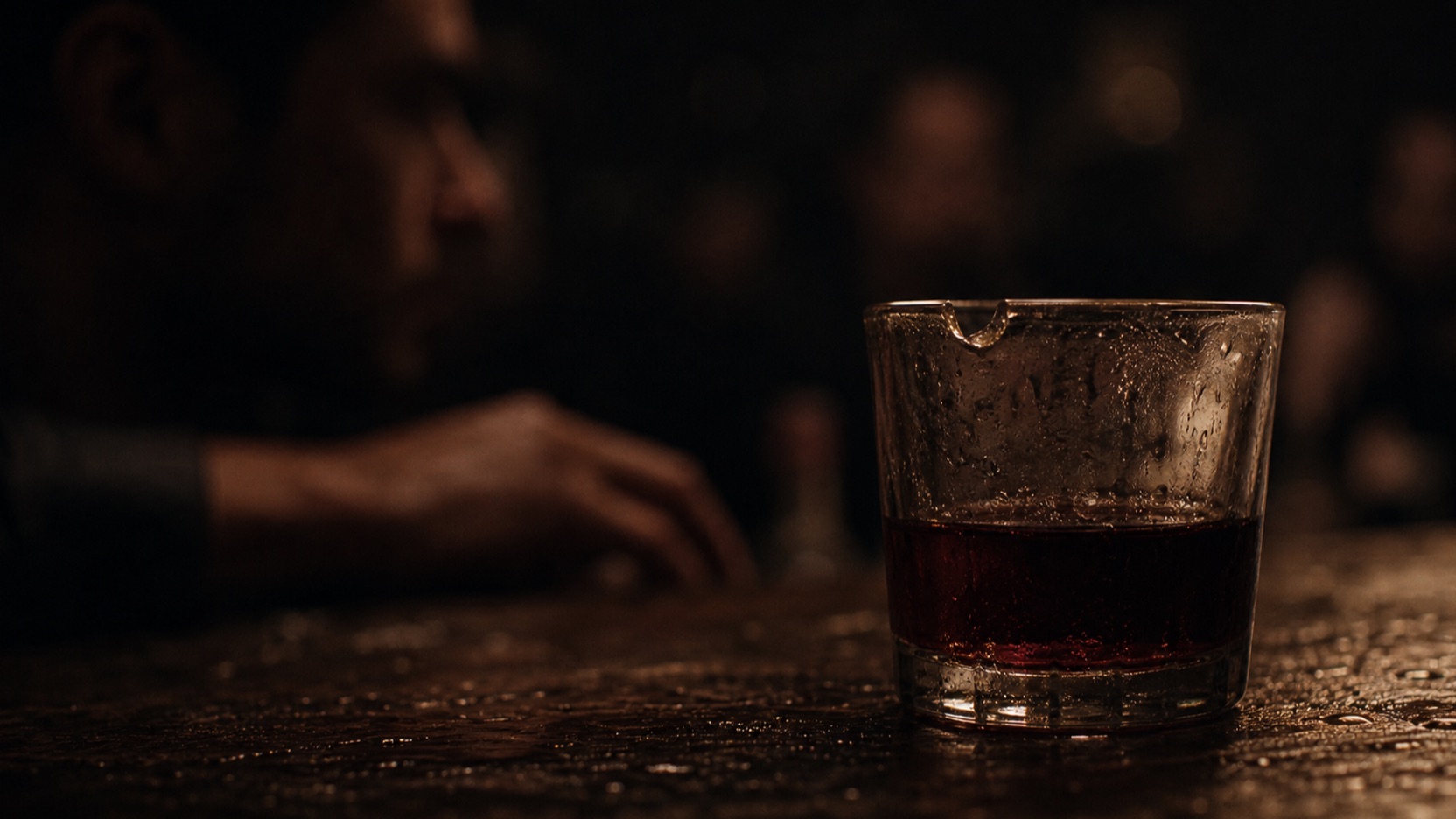
Revelation gives Babylon glamour. The woman is dressed in purple and scarlet, covered in gold, jewels, and pearls, with a golden cup in her hand. Kings drink with her. The nations are intoxicated by her. That image matters. The warning would be useless if corruption arrived looking like corruption. Nobody needs a prophet to warn them about a cup full of sewage. The dangerous cup is beautiful enough that powerful men raise it willingly.
The old image has lasted because it gets the bait right. Power rarely asks for your sight in plain language. It gives you warmth, safety, a side to stand with, a sentence to repeat when the room gets tense. It gives you a clean enemy. It gives you the relief of no longer having to examine your own fear. The cup is more than a lie: it is a place to hide. Drink, and you belong. Refuse, and you become the problem.
This does not require theology to see. In the 1950s, an American psychologist named Solomon Asch put a subject in a room with other people and asked them to compare lines on a card. The answer was visible. The other people in the room, who were part of the experiment, calmly gave the same wrong answer. Then the real subject had to choose between what their eyes saw and what the room had decided. Many chose the room at least once.
The study is usually filed under conformity, which is accurate and too bloodless. The real experiment was whether a person could stay with what they saw while everyone around them spoke as if the opposite were obvious. Most of us like to imagine we would be the one who held the line. Most of us would have felt our stomach tighten before our mouth opened, because the body hears the crowd before the mind hears the question. Nobody wants to call that worship, but the body knows when it has bowed.
Stanley Milgram made the authority version harder to dismiss. A volunteer was told to give shocks to a person in another room whenever that person answered incorrectly. The shocks were fake, the person in the other room was unharmed, but the volunteer did not know that. A man in a lab coat stood nearby and told the volunteer to continue. Many continued far past the point where any decent person, describing themselves at lunch, would insist they would have stopped.
The lab coat had replaced the priestly robe as the sign that somebody else had taken responsibility. That is the part people miss when they turn these experiments into trivia. The volunteers were not trying to be monsters. They were placed inside a structure where obedience felt authorised, hesitation felt personal, and responsibility seemed to have moved upward into the man with the clipboard. This is how people keep their self-image intact while doing things their self-image would normally forbid. Cowardice becomes easier to carry when authority puts a hand on its shoulder.
Religion, at its best, had been storing that pattern long before psychology named it. False prophets are not merely wrong teachers in old clothes. A false prophet is the person who gives the crowd a sacred reason to keep doing what it already wanted to do. They speak the group's desire back to it with moral music underneath. They tell the afraid their fear is wisdom, the resentful their resentment is justice, the obedient their obedience is goodness. By the time the crowd has finished applauding them, the lie has become a virtue and the crowd has kept its innocence.
The modern unbeliever likes to think they have escaped this because they no longer kneel in a church. I liked thinking that. Then I noticed how many supposedly free people repeat the same approved moral sentences with the same posture I used to mock in believers. The altar moved. The instinct stayed.
Every age has a cup. It can be nationalism, revolution, safety, compassion, science spoken as slogan by people who have never read the work, faith, the market, the oppressed, the children. The word changes. The permission underneath stays familiar: stop looking now, the good people have already decided. Virtue becomes the blindfold, and the blindfold feels clean.
The person who refuses the cup is rarely recognised as brave in the moment. They look difficult, paranoid, selfish, cold, arrogant, hateful, dangerous, or whatever word the room can use to turn refusal into a defect. The label matters less than the function. Once the label is attached, nobody has to answer what the person saw. The warning can be dismissed because the person carrying it has been made into the problem.
This is where demons become useful language again. A demon is what a human pattern looks like from the inside after it has taken over. You are still you. Your face does not change. You still love your children and pay bills and say please at the coffee counter. Then a certain topic enters the room and something in you moves before you have chosen it. Your jaw tightens. Your group is threatened. The approved line rises ready-made. It feels like thought because it uses your voice. If someone contradicts it, you do not hear an argument. You hear danger.
That is how possession would feel if it were ordinary.
I am not asking anyone to become religious. I am not even sure I could do that to myself if I tried. I am saying that the old stories may have been stranger and more practical than I gave them credit for. They took the thing in us that wants to bow with the crowd and gave it a face. They dressed the city in purple and scarlet because warnings need an image, and because beauty is part of the danger. An ugly lie has to fight its way in. A beautiful one gets invited, then gets thanked for coming.
The work is smaller and uglier than starting a revolution. Notice the moment the room offers you relief in exchange for your sight. Notice when a beautiful word asks you to stop checking. Notice when your side gives you permission to become cruel without feeling cruel. Notice when belonging starts calling itself truth. The trade will usually be offered politely. The cup will rarely smell like poison.
Nobody has to believe in demons to be taken by one. Nobody has to kneel to worship. A person only has to choose the warmth of the room over the thing they saw with their own eyes, then choose it again, and again, until the choice disappears. By then, they will probably call it conviction.
By the time you notice, your fingers are already around the cup.