
I was fifteen when the doctor told me I had cancer.
I remember watching his mouth form the word and feeling nothing, just staring at him as if he had recited a McDonald’s menu, waiting for whatever reaction was supposed to come next, but nothing did. I understood what he had said, I knew cancer was serious, and I knew people died from it, but the meaning never travelled the full distance from my ears into the rest of my body. It stayed somewhere outside me, as if the doctor had been talking about another boy in another room, and I had simply happened to be there when he delivered the news.
That still feels strange to me.
Maybe I was too young to understand the severity of it, or maybe the brain has a way of cutting the wires when something is too large to take in all at once, because I did not cry, I did not panic, and I do not remember asking whether I was going to die. I just sat there, looking at the doctor, while my parents absorbed the part of the sentence that my own mind had refused to let through.
Before that day, death had barely touched my life. I knew people died, obviously, but I knew it in the same distant way I knew the sun would eventually burn out, something true and unpleasant that belonged somewhere else, far beyond the edges of my own life. Death lived in films, newspapers, old photographs and relatives whose names I had heard but whose faces I could not picture. It belonged to old people with grey skin and tired hearts, not to children, and certainly not to me.
My childhood had given me no reason to expect anything else. My father was the kind of man who made loud men look insecure, because he never needed to tell anyone he was strong, you felt it in the way he stood, the way he shook your hand, and the way his word remained the same a week later when changing it would have been easier. He had a steadiness that filled a room without asking for attention, and when he was there, the world seemed less likely to come apart.
My mother carried the softer part of the house, and she could lower her voice and somehow lower the temperature of the whole room with it. I remember coffee in the afternoon, music playing while dinner cooked, and her hand resting on my shoulder for a moment as she passed behind me. Small things, but childhood is mostly made from small things, and you rarely understand their size while you are still living inside them.
Together, they made the world feel safe, and I was allowed to wander, make mistakes, try things I was bad at and come home without having to explain why I had failed. Home was home. I did not spend my childhood studying the faces of adults, trying to work out what version of them I was about to meet, and I did not lie awake imagining that everything I loved could disappear.
Then that doctor said that one word, and within days I was lying beneath the clean, cold walls of a hospital with plastic tubes taped to my skin.
The machines beside the bed blinked through the night, and every few seconds something clicked, hissed or gave a small electronic complaint, while nurses came in, checked numbers, changed bags and pushed poison through a clear tube into my veins. It entered the blood cold, then moved through the rest of me, searching for cells that were growing too fast, and it was meant to kill the cancer before it killed me.
I remember the doctor explaining it to me. He said they'd calculate what will kill me, then tone it down a bit.
That is what chemotherapy is. Poison with good intentions.
The body does not understand that the poison is there to help, it only knows that something harmful has entered the blood, and so it fights, vomits, sweats, shakes and weakens. Hair falls out, the mouth tastes wrong, the stomach turns against food, and the skin starts to look like it belongs to someone who is dying.
My life settled into a cycle that repeated itself until time became difficult to measure in any other way. One week of treatment, then one week when I couldn't eat, then one week when I ate as much as I could, trying to put something back into the body before the whole thing began again.
Certain foods became disgusting. The smell could turn my stomach before I even saw what was on the plate, and the stomach would tighten at the thought of swallowing. Even water could feel wrong, as if the body had decided that everything entering it was another threat.
Then, slowly, hunger returned, and for a few days I would eat, gain back a little strength and feel the blood come alive again. The face would look less hollow, the hands would stop trembling as much, and the body would begin to resemble mine.
Then it was time to return to the hospital.
Treatment, nausea, hunger, and back again.
I do not remember thinking much about my own death during those first cycles, because the body keeps the mind busy when it is sick enough. Large questions disappear when swallowing water requires concentration, and you stop wondering about the meaning of life when getting through the next hour is enough work.
The other children were harder.
There was a playroom on the ward, and sometimes I would see them moving through it with IV stands trailing behind them, the small metal wheels rattling over the floor, but I rarely spoke to any of them. Some were much younger than me, small bodies in hospital clothes, tubes taped to thin arms and parents following closely behind, but I kept to myself and watched from a distance.
I think I was ashamed, although I am still not entirely sure what I was ashamed of. Maybe it was being sick, or looking sick, or being seen in that state, with the hair gone, the body weakened and a machine beside me making it obvious that something inside had gone wrong. At fifteen, you are already uncomfortable in your own skin, and the cancer turned my skin into evidence.
So I isolated myself. I watched more than I spoke.
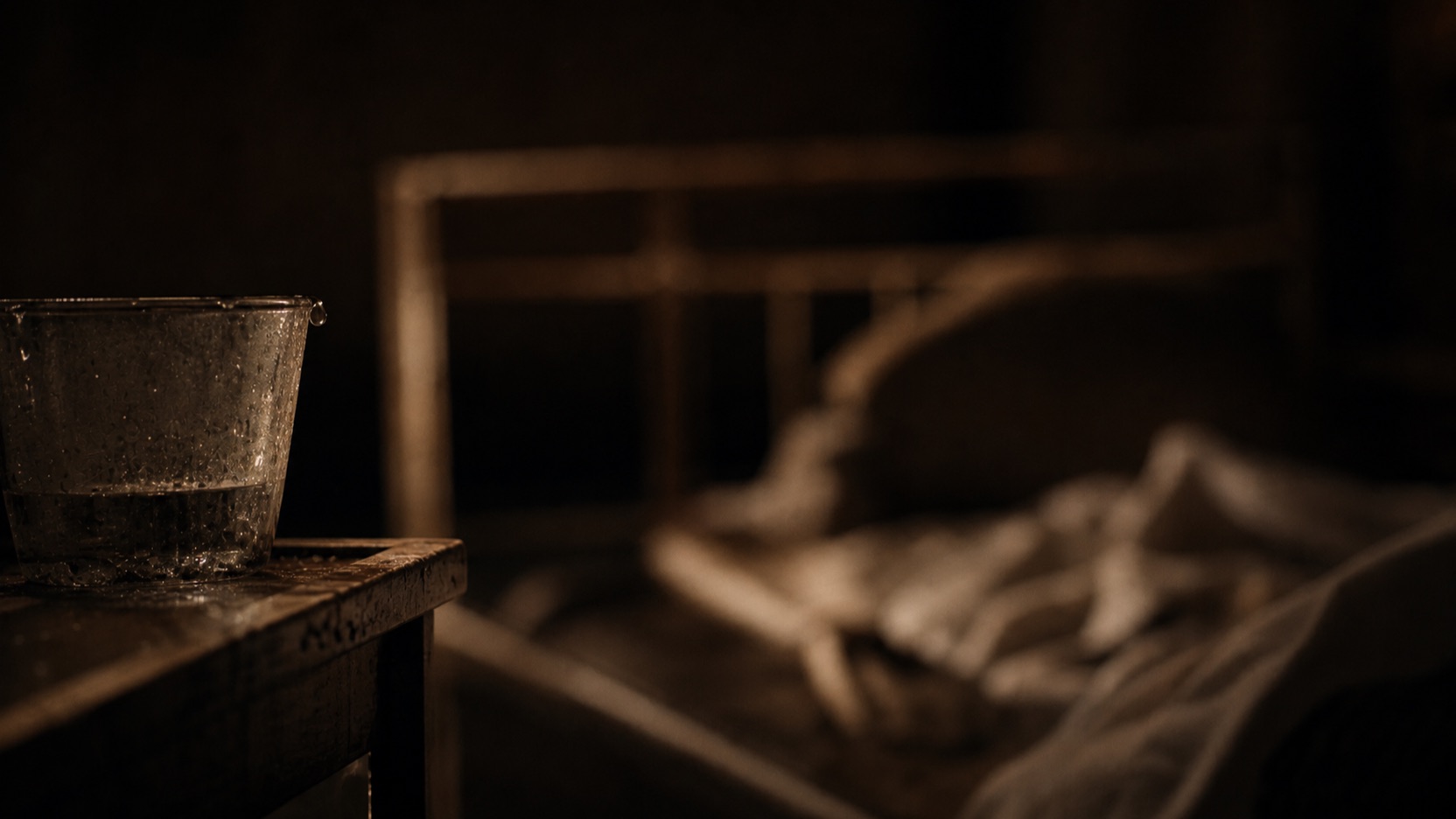
A small child might be lying in the bed beside mine one day, breathing through the night, with a parent folded into a chair nearby, and a few days later I would return and the bed would be empty. The sheets had been changed and pulled tight again, clean enough to erase the body that had been lying there, and there would be no breathing in the dark, no parent beside the bed, only the hum of the hospital carrying on as if nothing had happened.
I knew why the child was gone, but my mind refused to stay with the thought. It would touch it for a second, then pull away, like a hand against a hot surface, and I would look at the empty bed and pretend it meant nothing.
Gone.
The bed should have reminded me that I might be next, and perhaps it did somewhere underneath everything else, but I could not hold that thought for long. I had not even learned how to shave properly, and I was watching children disappear from one week to the next, their bodies removed, their sheets changed and the beds made ready for whoever came after them.
Outside the hospital, my friends were living inside a different world. They had school, arguments, crushes, parties and all the things that are supposed to feel enormous at that age, while I was learning the meaning of blood counts, and which numbers had to rise before I could go home, and what it meant when a nurse looked at a result for half a second too long.
Before cancer, I had believed in later. Later was where death lived, a distant place filled with grey hair, weak hearts, swollen hands and bodies that had slowly worn themselves out. I was fifteen, my body was supposed to be growing, and instead it had begun trying to kill me from the inside.
Bodies do not care what is supposed to happen. A few cells begin dividing the wrong way, and the entire life built around that body begins to collapse, parents stop sleeping, conversations happen behind closed doors, hands shake while pretending not to, and the future, which once seemed endless, shrinks down to the next blood test.
But I survived.
The treatment ended, my hair grew back, and the visible signs of illness slowly disappeared. People saw me standing, speaking and eating, and assumed the story had reached its happy ending, cancer gone, child returned, life resumed.
Part of that was true. I went back to school, the routines came back, my body repaired what it could, and the world began asking ordinary things from me again. But death had already entered my life, and once you have seen it that close, you cannot put it back where it was.
It no longer belonged to old people or newspapers. It had slept in the bed with me, and I had seen how quickly a person could be removed, how efficiently the sheets could be changed, and how the room could be made ready for the next body.
Cancer entered my parents’ marriage too. A family can hold together beautifully while life is kind, but serious illness finds every weak joint and places its full weight on it, fear becomes exhaustion and exhaustion becomes anger.
My parents loved me, and they loved each other, but love does not make people immune to pressure, and it does not stop frightened people from hurting one another when there is nowhere else for the fear to go. The house changed, conversations hardened, silences lasted longer, and the warmth I had grown up inside was still there, but it no longer reached every room.
Something had cracked.
More deaths followed over the years. Relatives died, accidents happened and phones rang at the wrong hour, and sometimes the person calling would say nothing for the first few seconds, because the words were stuck behind a closed throat.
Then came the hospital corridors again, except now I was standing beside someone else’s bed.
There is a different kind of helplessness in watching another person suffer, because when it was my body there were things to endure, a needle could be held still for, a pill could be swallowed and vomit could be wiped from the mouth. When someone you love is dying, your own hands become useless, and you adjust a blanket, offer water, touch an arm, then stand there with all the strength in your body and nowhere to put it.
After enough deaths, my own stopped feeling unlikely, and I would lie awake and picture the mechanics of it, the heart losing its rhythm, blood no longer reaching the brain, the body cooling, and the face becoming something relatives would recognise and fail to recognise at the same time.
The part I could not accept was disappearing.
Every memory I had carried, every person I had loved and every private joke that meant nothing outside the two people who shared it, all of it would vanish when the tissue inside my skull stopped working. The world would continue, traffic would move, people would eat lunch, complain about the weather, fall in love, buy groceries and forget to answer messages, and I would not be there for any of it.
For years, I tried to imagine what that absence would feel like, and the attempt always failed because I was still there imagining it. I placed myself inside nonexistence, then looked around for what it contained, which is a little like trying to see through the back of your own head.
Religion offered answers, but no proof, and philosophy offered arguments, but no witness. Nobody had returned with photographs, measurements or even a badly written note on a piece of toilet paper explaining what happened after the body stopped. There was only silence, and for a long time I found that silence unbearable.
I tried to fill it with work, relationships, distraction and all the small ambitions people use to keep the mind occupied, and it worked during the day, but when the lights went out and there was nothing left to hear except my own breathing, death was still there.
The fear came from trying to remain present for my own absence. I imagined the world without me, then forced myself to stand inside that world and watch it continue, and I pictured everything I would lose while somehow remaining conscious enough to suffer the loss.
But that is impossible.
If death ends consciousness, there will be no part of me left to experience being dead. I will not lie inside the dark missing music, warmth, touch or the sound of someone I love moving around in the next room, because there will be no dark, there will be no room, and there will be nobody left to notice the difference.
The fear belongs to the living body. It sits in the chest, tightens the stomach, dries the mouth and wakes the mind at three in the morning, and whatever death is, the terror of it happens here, while blood is still moving and the lungs are still pulling air.
Understanding that did not make me eager to die, and it did not remove the fear, because the body is built to survive, and when it senses danger it does not care what conclusions the mind has reached. It floods the blood, tightens the muscles, sharpens the breath and fights for another second.
But the thought loosened death's grip.
I had also been thinking about death as if it only removed the good: the warmth of another body, laughter from another room, music arriving at the right moment, a full stomach and a hand closing around mine. It removes all of that, and the loss is enormous, but it also removes pain.
The mind stops returning to old humiliations, regret loses the mouth it used to speak through, anxiety no longer has a stomach to twist, and envy, grief, shame, heartbreak, chronic pain, the ache in the joints and the pressure behind the eyes all end with the same body.
I would never call death a gift, because that would be dishonest, especially after watching it take children who had barely begun living, but I can no longer see it as something that only steals. It ends the whole experience, the pleasure and the pain, the love and the fear, the memories we want to keep and the ones that wake us in the middle of the night.
That is what changed for me. It closes the ledger completely.
Death was once the thing waiting in the dark, ready to tear me away from everything I loved, and I spent years trying to see beyond it, terrified by the thought that I would one day disappear and leave the world carrying on without me.
Now I understand that I was trying to experience something that, by definition, cannot be experienced.
When death eventually comes, I will probably still be afraid, my heart may race, my hands may shake, and my body will fight for another breath because that is what bodies do, but fear is no longer the only thing I feel when I think about it.
There is curiosity too.
I do not know whether something waits beyond the final breath or whether there is nothing at all, and I no longer need to pretend that I know. Either possibility is easier for me to accept now, because death no longer looks like an enemy standing in the dark.
It looks like the last step into the great unknown, where every question is finally answered, or finally forgotten.